

Berks County Residents Asked Tough Questions About ICE Cooperation. The Prison Board Didn't Answer Most of Them.

At this month's Berks County Prison Board meeting, residents from across the county came prepared with thoughtful questions about the prison's ongoing cooperation with U.S. Immigration and Customs Enforcement (ICE). They spoke about constitutional rights, due process, taxpayer dollars, humanitarian concerns, and the role our local government plays in transferring people into federal immigration custody.
What they received in return was something quite different.
Rather than directly addressing many of the questions posed by the public, the discussion largely shifted away from the Prison Board's own decision-making and toward the actions of the federal government.
Residents Raised Questions About Local Responsibility
The public comments reflected a common theme: regardless of federal immigration policy, Berks County still has choices about how it uses its own resources and whether it voluntarily honors ICE detainers.
Residents raised concerns that included:
How recent federal court decisions have weakened due process protections for immigrants.
Whether Berks County should continue voluntarily transferring people into ICE custody given widespread reports of inadequate medical care, prolonged detention, and family separation.
Whether people awaiting trial have been transferred before their criminal cases were resolved.
Whether county tax dollars should be used to assist federal immigration enforcement.
What protections exist for vulnerable populations, including transgender individuals in custody.
Whether the Prison Board would reconsider its current detainer policy.
Several speakers made clear that they were not asking Berks County to rewrite federal immigration law. They were asking local officials to end the county's participation in a system that is causing real harm, stripping people of due process, and making the county complicit in abuses it has the power to refuse.
Questions About Ethics Went Unanswered
One question asked during public comment was straightforward:
Are members of the Prison Board morally and ethically comfortable making decisions that could result in people from Berks County being transferred into detention facilities that have been criticized by government oversight agencies, journalists, medical professionals, and human rights organizations?
Another asked what assurances the Board had sought that people transferred into ICE custody would be treated humanely.
Neither question received a direct answer.
One of the most compelling comments came from Berks County resident and two-time U.S. Olympian Sam Mattis. Speaking not as a politician or advocate, but as someone who represents the United States on the international stage, Mattis described how athletes from around the world regularly ask him what is happening with ICE in America. He said friends have canceled trips and competitions in the U.S. because they fear being detained and expressed disappointment that Berks County is contributing to policies that have damaged the country's reputation abroad. His message was simple: he wants to be able to tell the world that his hometown is choosing compassion and doing what it believes is right. His comments served as a reminder that decisions made at the local level can shape not only our community, but also how America is perceived far beyond our county's borders.
Likewise, requests for information about how many pretrial detainees have been transferred to ICE, whether the Board would reconsider its detainer policy, and what protections exist for transgender detainees were not addressed during the response period.
Judge Lash Framed the Issue Differently
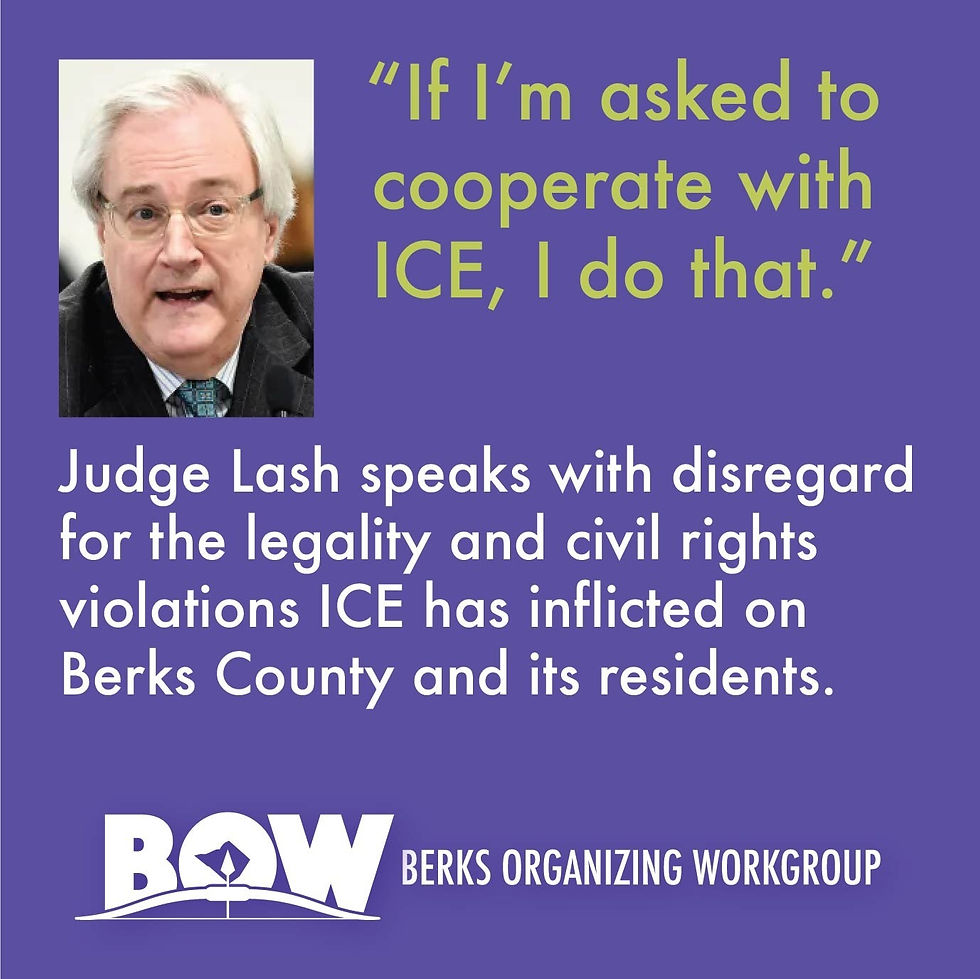
Judge Lash acknowledged that abuse within ICE is unacceptable.
However, rather than discussing the Prison Board's own discretion, he argued that misconduct by individual ICE officers should be addressed by the federal government.
He compared ICE to local police departments, noting that police misconduct also occurs but that society continues to cooperate with law enforcement despite those abuses. In his view, the solution is to remove bad actors—not to end cooperation with the agency itself.
He also argued that residents who oppose federal immigration practices should direct their concerns to elected federal officials and vote for change at that level.
This response answered one question: why he believes cooperation should continue.
But it did not directly engage with many of the questions residents actually asked about the Board's own role, discretion, or ethical responsibilities.
D.A. Adams Focused on History
District Attorney John Adams offered a much shorter response.
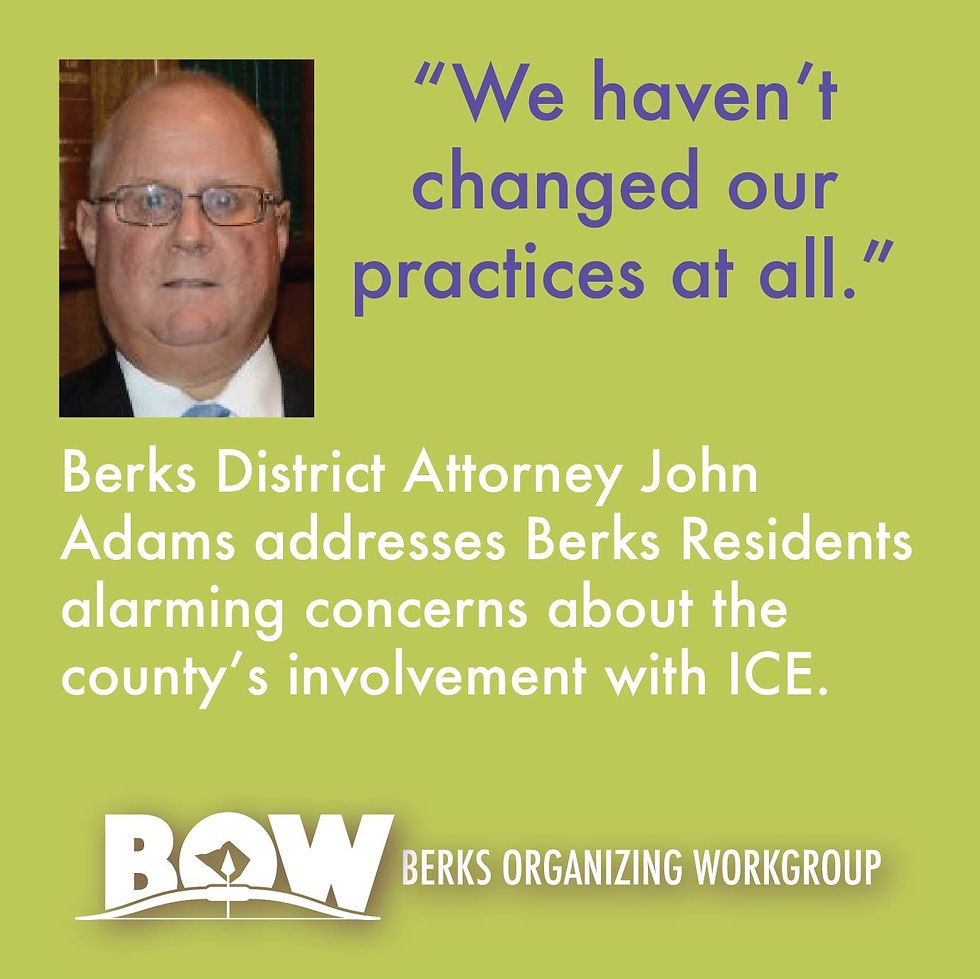
His primary point was that Berks County has cooperated with ICE for many years and that the county's practices have not changed. He stated that individuals transferred to ICE have been charged with or convicted of crimes and emphasized that this longstanding cooperation predates the current administration.
While this explains the history of the policy, it does not answer why the Board believes the policy remains appropriate given the concerns residents raised about changes in federal immigration enforcement and detention practices.
Accountability Analysis
Public concern | Response | Directly answered? |
Should Berks voluntarily cooperate with ICE? | Lash defended continued cooperation. | Yes, but only at the level of general policy. |
Is the Board morally comfortable transferring people into criticized detention systems? | No direct response. | No. |
What assurances exist regarding humane treatment after transfer? | No assurances were identified. | No. |
How many pretrial detainees were transferred? | No numbers provided. | No. |
Will the Board reconsider the detainer policy? | No commitment to reconsider. | No. |
Will the Board acknowledge responsibility for choosing to cooperate? | Lash characterized cooperation as appropriate and redirected concerns toward federal authorities. | Partially. |
Accountability Means Answering Difficult Questions
Public meetings exist so residents can ask questions of the officials making decisions on their behalf.
This month's meeting demonstrated that Berks County residents are paying attention. They are reading court decisions. They are researching detention conditions. They are asking thoughtful questions about constitutional rights, public resources, and moral responsibility.
Those questions deserve direct answers.
Instead, many were met with broader discussions about federal authority, historical practice, and general cooperation with law enforcement.
Whether one supports or opposes ICE enforcement, there is an important distinction between defending a policy and explaining it.
Residents asked why Berks County continues to voluntarily cooperate with ICE despite documented concerns about detention conditions. They asked what oversight exists after people leave county custody. They asked whether the Board has reconsidered its policy in light of changing federal circumstances.
Those are questions about local governance.
And based on the discussion at this meeting, many of those questions remain unanswered.
As community members, we should continue attending meetings, asking questions, and expecting thoughtful, transparent responses from the officials entrusted with decisions that affect our neighbors and our community.



Comments